Search in:
works
blog
Black And White Fallacy - Youtube In Syria

BLACK AND WHITE FALLACY

20 September 2011, Damascus

Some extracts of the interviews by Tareq Neman in the article The War for Credibility about the media in Syria, published in English in the October issue of What's On Syria magazine. The surnames seem to be abbreviated, because most of the Syrians wouldn’t tell their political opinions (especially if they against the regime) in public.

Khaldoun Sa, 45, math teacher: Local media will not cover the news neutrally and global media will not transmit the right news.

Ahmad Sa, 27, employee: I watch the Syrian official channels because they refute the fake clips that protester upload on YouTube.

Souha Ra, 52, house wife: I can’t imagine that there is anyone who believes Al Jazeera or any enemy channels – they are working to defeat Syria, the land of heroes, the last castle against Israel.

Ahmad Ab, 27, dentist: The Americans are working to destroy Syria, they are using all what they can to control the minds of the Syrians.

Hannan Li, 30, housewife: Let’s not forget the great work our national media in this very difficult stage, they have played a very big role in calming and comforting the people who saw the news and rumors that were being broadcast on the biased channels.

Hanna Sa, 30, accountant: I watch and believe the local media because they work to ease the situation, they love Syria and they desperately try to show the fact that the other channels work on hiding the facts. Good intentions justify the unrealistic coverage sometimes.

Ammar Sa, 52, professor: People will not believe the state channels whatever they do because they are hiding the truth that everybody knows.

Salem Sh, 25, teacher: I will never believe Syrian media, especially after the lie saying that the demonstrators were thanking God for rain.

Riiko Sa, 35, artist: Al Jazeera and the Western media base their information in the propaganda. The Syrian government should give journalists visas that they could see that it’s peaceful here and that the majority of people are against the Islamists and support the government, which doesn’t mean they like everything what it does.


The Patriot Panorama - Tishreen Panorama

THE PATRIOT PANORAMA

19 September 2011, Damascus

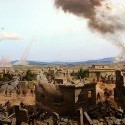
I had never seen a painting that could be compared in size with the 130-meter-long Tishreen Panorama, which the visitors look from a circular rotating platform.

I was the only person visiting this 1973 October War (called Yom Kippur War in the Zionist entity) memorial and sitting on the VIP seat and accompanied by six guides (one of them guiding me and the others laughing at my translated comments). At the entrance armed men in civil apparel had checked my passport and written down its number.

The work, engineered and painted by North Koreans, depicts the battle of Quneitra in the Golan Heights. It’s annoying to see a romantic presentation of war without any horrors – no Syrian casualties, no fear, no blood, no raped civilians. It’s awfully false and beautiful. It would be easy to laugh at the Syrian patriotic pride of a lost war but I’m from Finland, a nation that remembers its defeat in the WWII (allied with the Nazi Germany) with producing regularly war hero films and forgets the concentration camps where the Soviet civilians were interned.

One day, I want to paint my Turbo Realist Panorama. I need few hundred thousand euros and a squadron of Korean painters. I would just add burgers and beer service while your seat rotates. And of course a gift shop what the Syrians had totally dismissed – maybe this really is a sort of a socialist country.


Kiosk Capitalism - Turbo

KIOSK CAPITALISM

17 September 2011, Damascus

I skype home and see my daughter on the screen of the iPhone. She asks in Spanish who is that man with mustache. I get homesick and shave my facial hair. Then I do some shopping in Raed’s tiny corner shop, where I get always my milk, juice, beer and cigarettes. He opens seven days a week, seven in the morning every morning and closes at two in the night. Then he watches two hours TV and sleeps two hours but he doesn’t complain and never looks tired.

I buy stuff for my Syria for Dummies slide show: Captain Corn Cheese Flavor, Fifty Jambo Snacks with Chicken Flavor, Ranim Snacks Ketchup, Ammo Corn Japan Flavor and Turbo Chocolate Cream Wafers.

All the shops are like Raed's. No supermarkets, no department stores. This is kiosk capitalism, a bit like what I saw in the 90s in Russia. I’ve tried to find out if Baath Party’s Arab socialism was real socialism during Assad Senior’s regime but nobody has explained this to me yet and Wikipedia has no information about it. At least the official enemies of that time were: imperialism, Zionism, capitalism and the Muslim Brotherhood.


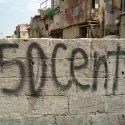
Artist Talking To Nobody - 50 Cents

ARTIST TALKING TO NOBODY

15 September 2011, Damascus

The Finnish Institute organized yesterday night my artist talk and they told me they had invited some "selected" art world people to see my works and chat with me. They said that in these uncertain times it's better to keep it small and private. Before the residency I asked them if could make a small exhibition but according to them my art can not be exhibited in Syria. They would have never invited my kind of artist but I was chosen by Frame in Helsinki.

We had wine and canapés prepared – but nobody came to listen my talk. I don’t know what this tells about Damascus, maybe it’s more about the Finnish Institute and the idea of exporting culture. I would never participate in any activity organized by the Syrian Institute (if it existed) in Madrid or Helsinki. These institutes don’t have real contact to the local art world and from outside they look like simple propaganda. After the conflict with the director of Institute, I’m also thinking about the possibility that my artist talk was fake, that they invited nobody to avoid troubles.

Residencies make sense only when they are done in collaboration with local institutions. The national structures could offer funding and housing but the content should be responsibility of somebody who genuinely knows the context and the people. The Institute hasn’t been able to introduce me to anybody here and I’m feeling extremely lonely. I didn’t know what it was going to be like here and I was mentally prepared to face a variety of problems but definitely I didn’t think about getting bored.


An Enemy Combatant In The Building - The Finnish Institute In Damascus

AN ENEMY COMBATANT IN THE BUILDING

14 September 2011, Damascus

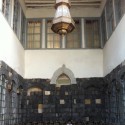
The Finnish Institute in the Middle East, where I’m staying, is a magnificent Ottoman palace in the heart of the old town. An amazing setting to feel the history but far away from the present. The atmosphere is hideous. The director is back from Helsinki and informed me that he sets the rules and if I don't follow them, he can "kick me out" any moment. The rules include a right to censor everything I write or say during the residency. The Institute demands also a right to censor my article that I've been asked to write for Framer, the magazine of Frame Finnish Fund for Art Exchange which has organized my residency. I tried to speak to the director about dialogue and horizontal communication and proposed him to go together to hammam - Finnish men have always had the important discussion in sauna - but he said no to everything and now I consider him an enemy combatant.


Riiko
Sakkinen
 

2020

0102030405
06
07
08
09
10
11
12


2019

010203040506070809101112


2018

010203040506070809101112


2017

010203040506070809101112


2016

010203040506070809101112


2015

010203040506070809101112


2014

010203040506070809101112


2013

010203040506070809101112


2012

010203040506070809101112


2011

010203040506070809101112


2010

010203040506070809101112


2009

010203040506070809101112


2008

010203040506070809101112


2007

010203040506070809101112


2006

01
02
03
04
05
06
07
08
09101112


RSS